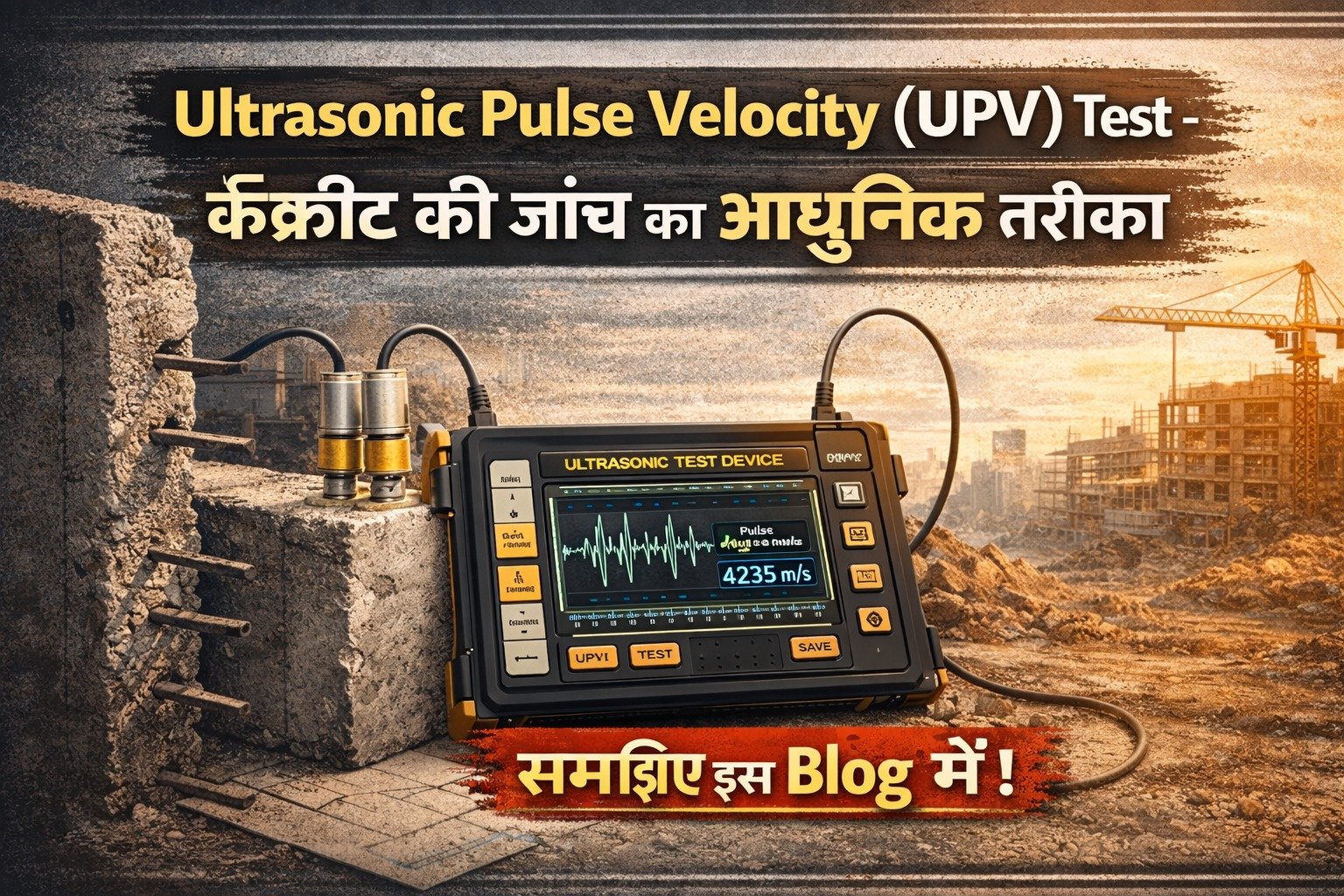
अगर आप construction field से जुड़े हैं या फिर अपना घर बनवा रहे हैं, तो आपने कभी न कभी यह सवाल जरूर सोचा होगा कि जो concrete लगाया गया है, वो सच में मजबूत है या नहीं? क्या उसमें कोई खामी तो नहीं? पहले के समय में तो बस यही तरीका था कि concrete के sample लेकर lab में तोड़कर देखो। लेकिन आज के दौर में technology ने काम बहुत आसान कर दिया है। आज मैं आपको एक ऐसे ही test के बारे में बताने जा रहा हूं जिसे Ultrasonic Pulse Velocity यानी UPV Test कहते हैं।
Ultrasonic Pulse Velocity होता क्या है?
सीधी भाषा में कहूं तो यह एक Non-Destructive Test (NDT) है। मतलब इस test में आपको concrete को तोड़ना नहीं पड़ता। बस एक machine से ultrasonic waves भेजी जाती हैं और उनकी speed देखकर पता चल जाता है कि concrete की quality कैसी है। जैसे doctor अल्ट्रासाउंड से शरीर के अंदर देख लेते हैं, वैसे ही engineers इस test से concrete के अंदर की हालत समझ लेते हैं।
मेरा एक दोस्त civil engineer है। उसने बताया कि पुराने buildings की जांच में यह test बहुत काम आता है। बिना किसी नुकसान के पता चल जाता है कि structure अभी कितना मजबूत है।
यह Test कैसे काम करता है?
इसका principle बिल्कुल सरल है। मान लीजिए आपने पानी में पत्थर फेंका, तो लहरें बनती हैं ना? वैसे ही इस test में ultrasonic waves concrete के एक तरफ से भेजी जाती हैं। ये waves concrete के through travel करती हैं और दूसरी तरफ receiver उन्हें पकड़ लेता है।
अब जितनी अच्छी quality का concrete होगा, उतनी तेज़ी से ये waves travel करेंगी। अगर concrete में cracks हैं, voids हैं (यानी खाली जगह), या फिर कोई कमज़ोरी है, तो waves की speed कम हो जाएगी। बस इसी speed को measure करके हम concrete की condition judge कर लेते हैं।
Equipment कैसा होता है?
UPV test के लिए जो instrument इस्तेमाल होता है, वो बहुत ज्यादा complicated नहीं है। इसमें मुख्य रूप से तीन चीज़ें होती हैं:
1. Transducers (Transmitter और Receiver): ये दो probes होते हैं। एक waves भेजता है और दूसरा receive करता है। इन्हें concrete की surface पर लगाया जाता है।
2. Display Unit: यह screen होती है जहां reading आती है। आजकल के modern instruments में digital display होती है जो direct velocity दिखा देती है।
3. Connecting Cables: ये transducers को main unit से जोड़ती हैं।
पूरा setup इतना portable होता है कि site पर आराम से ले जाया जा सकता है।
Test करने के तरीके
UPV test को तीन अलग-अलग तरीकों से किया जा सकता है:
1. Direct Method
यह सबसे accurate method है। इसमें transmitter और receiver को concrete के opposite faces पर लगाया जाता है। यानी एक तरफ से wave भेजो, सीधे दूसरी तरफ से receive करो। Column या beam की testing के लिए यह method सबसे बढ़िया रहता है।
2. Semi-Direct Method
जब दोनों opposite faces तक पहुंचना possible नहीं हो, तब यह method use करते हैं। इसमें transducers को adjacent surfaces पर लगाते हैं। Accuracy थोड़ी कम हो जाती है लेकिन फिर भी काफी reliable results मिलते हैं।
3. Indirect Method
यह तब use होता है जब सिर्फ एक ही surface accessible हो। दोनों transducers को same surface पर different positions पर लगाते हैं। यह method least accurate है लेकिन slab की surface testing के लिए useful है।
मैंने एक renovation project में देखा था जहां पुरानी building की walls की testing हो रही थी। वहां mostly semi-direct method ही काम आया क्योंकि दीवार के दोनों तरफ जाना मुश्किल था।
Test कैसे किया जाता है? (Step by Step)
चलिए अब practical side देखते हैं कि actually site पर यह test कैसे होता है:
Step 1: सबसे पहले जिस concrete की testing करनी है, उसकी surface को साफ़ करो। Dust, loose particles सब हटा दीजिये ।
Step 2: अब transducers के contact points पर coupling medium लगाओ। यह एक gel या grease होता है जो waves को properly transfer होने में help करता है। बिना इसके waves सही से नहीं जाएंगी।
Step 3: Distance को measure करो। Transmitter और receiver के बीच की दूरी accurate होनी चाहिए।
Step 4: Transducers को concrete पर firmly press करो और reading लो। कई बार reading repeat करनी पड़ती है consistency check करने के लिए।
Step 5: Machine transit time बताएगी। उसे distance से divide करके velocity निकाल लीजिये ।
Formula simple है: Velocity (V) = Distance (L) / Transit Time (T)
Results का मतलब क्या होता है?
अब सबसे important part – readings को समझना। Generally, concrete quality को velocity के base पर classify किया जाता है:
- Above 4.5 km/s: Excellent quality concrete
- 3.5 to 4.5 km/s: Good quality concrete
- 3.0 to 3.5 km/s: Medium quality (doubtful quality)
- Below 3.0 km/s: Poor quality concrete
लेकिन ध्यान रखिए, ये values approximate हैं। Actual interpretation में aur bhi factors देखने पड़ते हैं जैसे concrete की age, type of aggregate, moisture content आदि।
UPV Test के फायदे
इस test की popularity के कई कारण हैं:
Non-Destructive है: सबसे बड़ी बात – structure को कोई damage नहीं होता। आप existing building में बिना किसी तोड़-फोड़ के testing कर सकते हैं।
Quick Results: पुराने mechanical tests में days लग जाते थे। यहां minutes में result मिल जाता है।
Portable Equipment: Machine छोटी है, site पर easily ले जा सकते हैं। Height पर भी काम कर सकते हैं।
Cost-Effective: Sampling और lab testing के comparison में काफी सस्ता पड़ता है।
Comprehensive Coverage: पूरे structure के different points पर test करके overall picture मिल जाती है।
Hidden Defects: Surface से नज़र नहीं आने वाली internal problems भी पकड़ में आ जाती हैं।
Limitations भी जान लीजिए
हर technology की कुछ limitations होती हैं। UPV test की भी हैं:
Reinforcement का Effect: Concrete में steel reinforcement होती है ना, तो उससे waves की velocity बढ़ जाती है। इसलिए rebar की position का ध्यान रखना पड़ता है।
Moisture Content: Wet concrete में waves fast travel करती हैं। तो अगर recent rain हुई है या concrete में moisture है, तो reading misleading हो सकती है।
Surface Condition: Rough या uneven surface पर proper contact नहीं बनता तो reading सही नहीं आती।
Operator Skill: सही से test करने के लिए trained person चाहिए। Inexperienced operator गलत results दे सकता है।
Limited Information: यह test बताता है कि कहीं problem है, लेकिन exact nature of problem के लिए दूसरे tests की जरूरत पड़ सकती है।
Practical Applications
अब बात करते हैं कि real life में यह test कहां-कहां use होता है:
Quality Control: नई construction में concrete की quality check करने के लिए। जब concrete pour होता है, तो different locations पर testing करके uniformity check करते हैं।
Structural Assessment: पुरानी buildings की health checkup के लिए। खासकर जब renovation या strengthening करनी हो।
Fire Damage Assessment: आग लगने के बाद concrete को कितना damage हुआ, यह देखने के लिए UPV test बहुत काम आता है।
Crack Depth Measurement: Surface पर crack दिख रही है तो उसकी depth estimate करने में help मिलती है।
Grouting Quality: जब cracks में grouting की जाती है, तो उसकी effectiveness check करने के लिए भी इस test का use होता है।
मुझे याद है एक government building का audit हो रहा था जो 40-50 साल पुरानी थी। UPV test से पता चला कि कुछ beams में serious deterioration हो गया था। Timely action से major accident टल गया।
कुछ Practical Tips
अगर आप site पर UPV test करवा रहे हैं तो ये बातें ध्यान में रखें:
- हमेशा calibrated equipment use करें। Machine की regular calibration होनी चाहिए।
- एक location पर कई readings लें। Single reading पर depend मत करें।
- Temperature का ध्यान रखें। बहुत गर्मी या ठंड में concrete की property change हो जाती है।
- Coupling medium की quality important है। सस्ता या expired gel use मत करें।
- Results को document करें properly। Photos, sketches सब maintain करें।
- Comparative analysis करें। अलग-अलग areas की readings compare करके pattern देखें।
Future और Technology
Technology तो रोज advance हो रही है। आजकल तो digital UPV equipment आने लगे हैं जो automatic data logging कर देते हैं। कुछ instruments में तो wireless connectivity भी है। Mobile app से data directly computer या cloud पर transfer हो जाता है।
कुछ advanced systems में 3D mapping की facility भी होती है। आप पूरे structure का color-coded map बना सकते हैं जो visually दिखा देता है कि कहां problem है।
Conclusion
Ultrasonic Pulse Velocity test आज के समय में concrete testing का एक जरूरी tool बन गया है। यह fast है, reliable है, और non-destructive है। Construction industry में quality assurance के लिए यह बहुत important हो गया है।
हालांकि यह समझना जरूरी है कि UPV test अकेला solution नहीं है। इसे दूसरे tests के साथ मिलाकर use करना चाहिए। Complete picture के लिए visual inspection, rebound hammer test, core testing जैसी methods भी साथ में करनी चाहिए।
अगर आप अपनी property की testing करवा रहे हैं तो certified और experienced professionals को ही hire करें। Equipment तो important है, but उससे ज्यादा important है results को correctly interpret करना।
उम्मीद है इस article से आपको UPV test के बारे में अच्छी जानकारी मिली होगी। अगर आपके कोई सवाल हैं या अपना experience share करना चाहते हैं तो comment section में जरूर लिखें।
Safe construction, strong structures! 🏗️
Disclaimer: यह article general information के लिए है। Actual testing और decision making के लिए qualified structural engineer से consult जरूर करें।