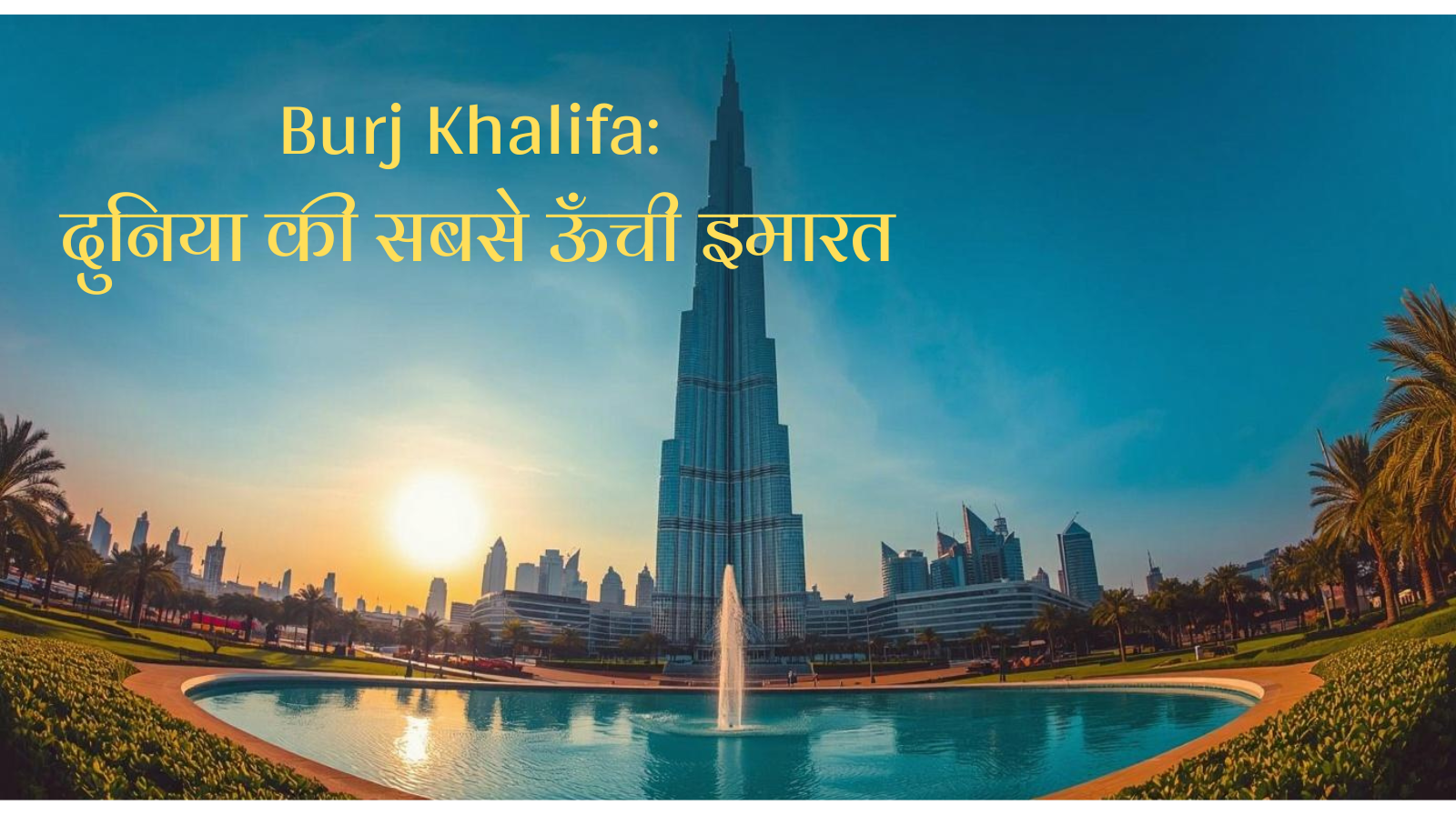
दुबई की शान Burj Khalifa केवल एक skyscraper नहीं, बल्कि इंसानी engineering की सीमाओं को पार करने वाला इतिहास है।
828 मीटर की अविश्वसनीय ऊँचाई के साथ यह दुनिया की सबसे ऊँची इमारत (Tallest Building in the World) है। इसका futuristic डिज़ाइन, revolutionary engineering systems और मेगा-construction techniques इसे 21वीं सदी का सबसे iconic structure बनाते हैं।
इस पोस्ट में हम Burj Khalifa की engineering, architecture, design philosophy, foundation technology, construction challenges, economic impact और civil engineering सीखने वालों के लिए learnings को गहराई से समझेंगे।
🏙️ Burj Khalifa क्या है? (Overview)
- Location: Downtown Dubai, UAE
- Height: 828 meters
- Floors: 163 + spire levels
- Construction Period: 2004–2010
- Architect: Adrian Smith (Skidmore, Owings & Merrill, SOM)
- Main Contractor: Samsung C&T (South Korea)
- Structural Engineer: Bill Baker (SOM)
- Materials: High-strength concrete + steel
Burj Khalifa का design एक “vertical city” की तरह किया गया है, जहां residential, commercial, hotel, observation deck, communication facilities—सब कुछ एक ही structure में मौजूद है।
🎨 Architectural Design — Inspiration और Concept
Burj Khalifa का design Middle-East के प्रसिद्ध फूल “Hymenocallis” से प्रेरित है।
फूल की तीन petal symmetry को architect Adrian Smith ने इमारत की shape में convert किया।
यह इमारत Y-shaped plan पर आधारित है, जिसके कई फायदे हैं—
✔ Wind loads को redirect करने में सहायता
✔ Maximum natural light
✔ Better space utilization
✔ Strong core for extreme stability
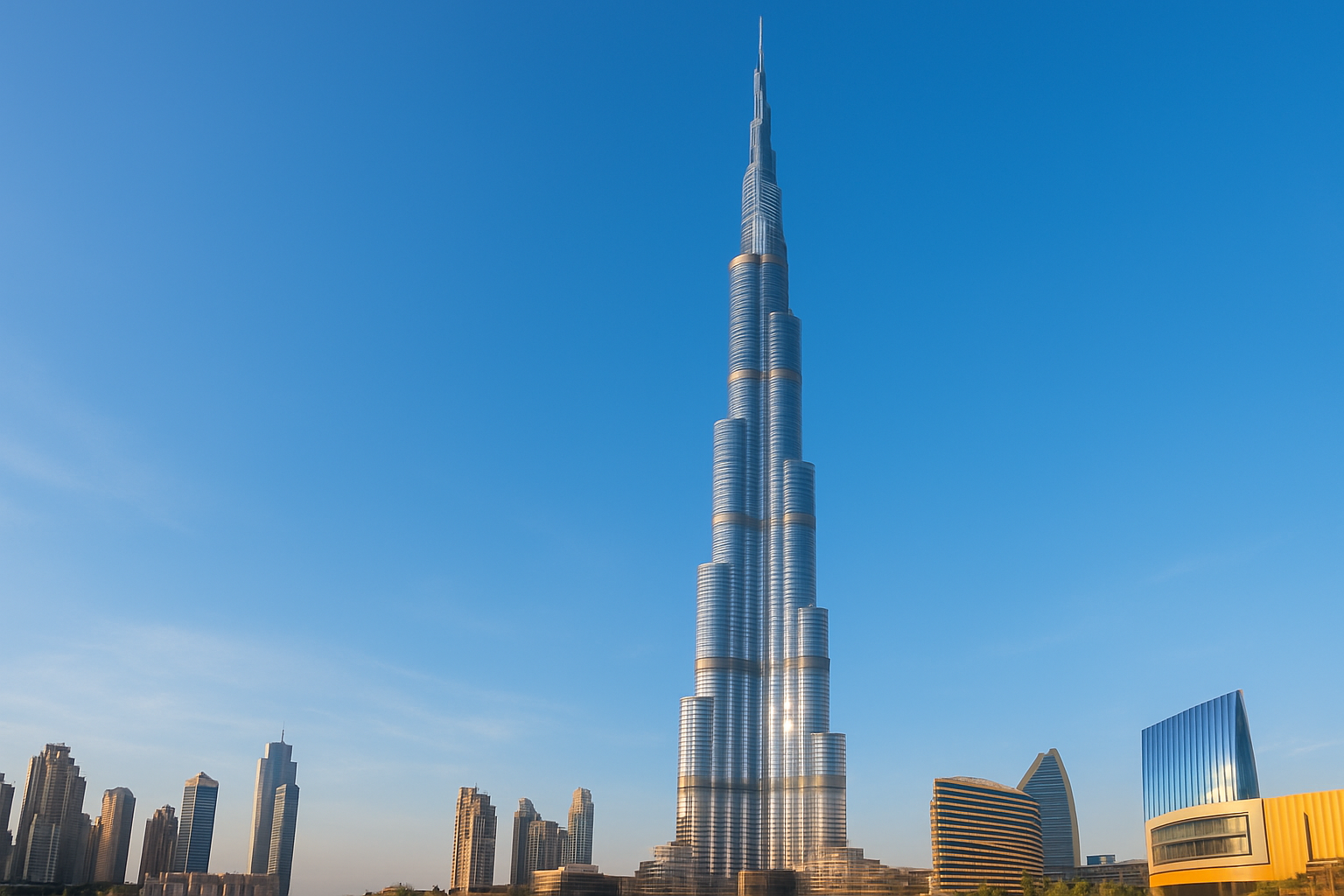
ऊपर की तरफ जाते-जाते structure taper होता है— इसे “buttressed core system” कहा जाता है, जो tall buildings के लिए अब global benchmark बन चुका है।
🏗️ Structural System — The Buttressed Core
Burj Khalifa का सबसे बड़ा engineering innovation इसका Buttressed Core System है।
यह तीन पंखों जैसा reinforced concrete structure है, जो एक central hexagonal core को support करता है।
Buttressed Core के फायदे:
- Ultra-high stability
- Lateral loads (wind + seismic) में extraordinary resistance
- Tallest structure without excessive sway
इसे civil engineering में supertall buildings का “gold standard” माना जाता है।
🧱 Foundation Engineering — 828m इमारत को जमीन पर कैसे टिकाया गया?
1. Raft Foundation
- 3.7 meters thick reinforced concrete raft
- 12,500 m³ concrete poured in single continuous operation
2. Deep Pile Foundation
- 194 piles, each 1.5 meter diameter
- Depth: 45 meters
- High-strength concrete used (55 MPa & above)
Dubai की sandy soil + high water table के कारण, foundation design सबसे challenging हिस्सा था।
🔩 Construction Materials Used
- High-performance concrete (designed to withstand 50°C heat)
- Special admixtures for rapid cooling
- 31,400+ tonnes stainless steel rebar
- 103,000 m² glass curtain wall
High temperatures में concrete cracking रोकने के लिए ice-cooled concrete तकनीक का उपयोग किया गया।
⛏️ Construction Timeline (2004–2010)
Phase 1: Site Preparation (2004)
- Foundation excavation
- Dewatering
- Pile installation
Phase 2: Vertical Construction (2005–2008)
- Rapid construction cycle: One floor every 3 days
- Self-climbing formwork system
- Concrete pumped up to 605 meters (world record)
Phase 3: Steel Spire Installation (2008–2009)
- Last 200 meters steel structure
- Crane lifting at extreme heights
Phase 4: Finishing & Interiors (2009–2010)
- Observation deck, Armani hotel, façade work
Opening:
4 January 2010, UAE के ruler Sheikh Mohammed bin Rashid ने इसे inaugurate किया।
🌬️ Wind Engineering — 828m को हवा से कैसे स्थिर रखा गया?
Burj Khalifa पर 150–200 km/h तक की हवाएँ लग सकती हैं।
इसका समाधान:
✔ Aerodynamic shaping
✔ Tapered structure
✔ Setback design
✔ Wind tunnel testing (over 40 tests)
✔ Buttressed Core
इमारत हवा की दिशा बदलने के लिए खुद को twist करती हुई लगती है — इससे vibrations और swaying कम हो जाता है।
🌡️ Extreme Climate Challenges
Dubai में तापमान 50°C तक जाता है।
इमारत को इससे बचाने के लिए:
- Solar heat reflective glass
- Curtain wall insulation
- Cooling system (20+ degrees difference)
- Expansion joints
Burj Khalifa प्रतिदिन 250,000 gallons पानी consume करता है cooling और utilities के लिए।
💡 Mechanical, Electrical & Plumbing (MEP) Systems
- 57 high-speed elevators
- Double-deck elevators: first in the world
- 10,000+ fire sensors
- Condensation recovery system → रोज़ाना 15 million liters पानी irrigation के लिए
यह एक high-tech vertical ecosystem है।
💰 Cost & Economics
- Construction Cost: ~$1.5 billion
- Economic Impact:
- Tourism revenue
- Property price boom
- Dubai को global business hub बनाने में महत्वपूर्ण योगदान
हर साल 20 लाख से अधिक पर्यटक इसे देखने आते हैं।
🧭 Burj Khalifa Tourism — Why Do People Visit?
✔ Observation Deck (At The Top — 124, 125 & 148 floors)
✔ World’s highest outdoor observation level
✔ Amazing night view of Dubai
✔ Dancing fountain show
✔ Luxury Armani Hotel
Burj Khalifa global photography और social media का सबसे iconic spot बन चुका है।
⭐ Civil Engineering Students के लिए Learnings
1. Buttressed Core System
2. High-rise foundation engineering
3. High-temperature concrete technology
4. Mega-project management
5. Wind engineering strategies
6. Vertical construction techniques
7. Façade engineering & curtain wall systems
यह हर civil engineer के लिए एक must-study project है।
🏁 Conclusion
Burj Khalifa यह साबित करता है कि imagination और engineering मिलकर असंभव को संभव बना सकते हैं।
Its height, architecture, construction technology, and engineering innovation इसे modern world का सबसे प्रतिष्ठित civil engineering wonder बनाते हैं।
अगर आप civil engineering, skyscrapers या mega-structures पर research करते हैं, तो Burj Khalifa एक unmatched case study है।