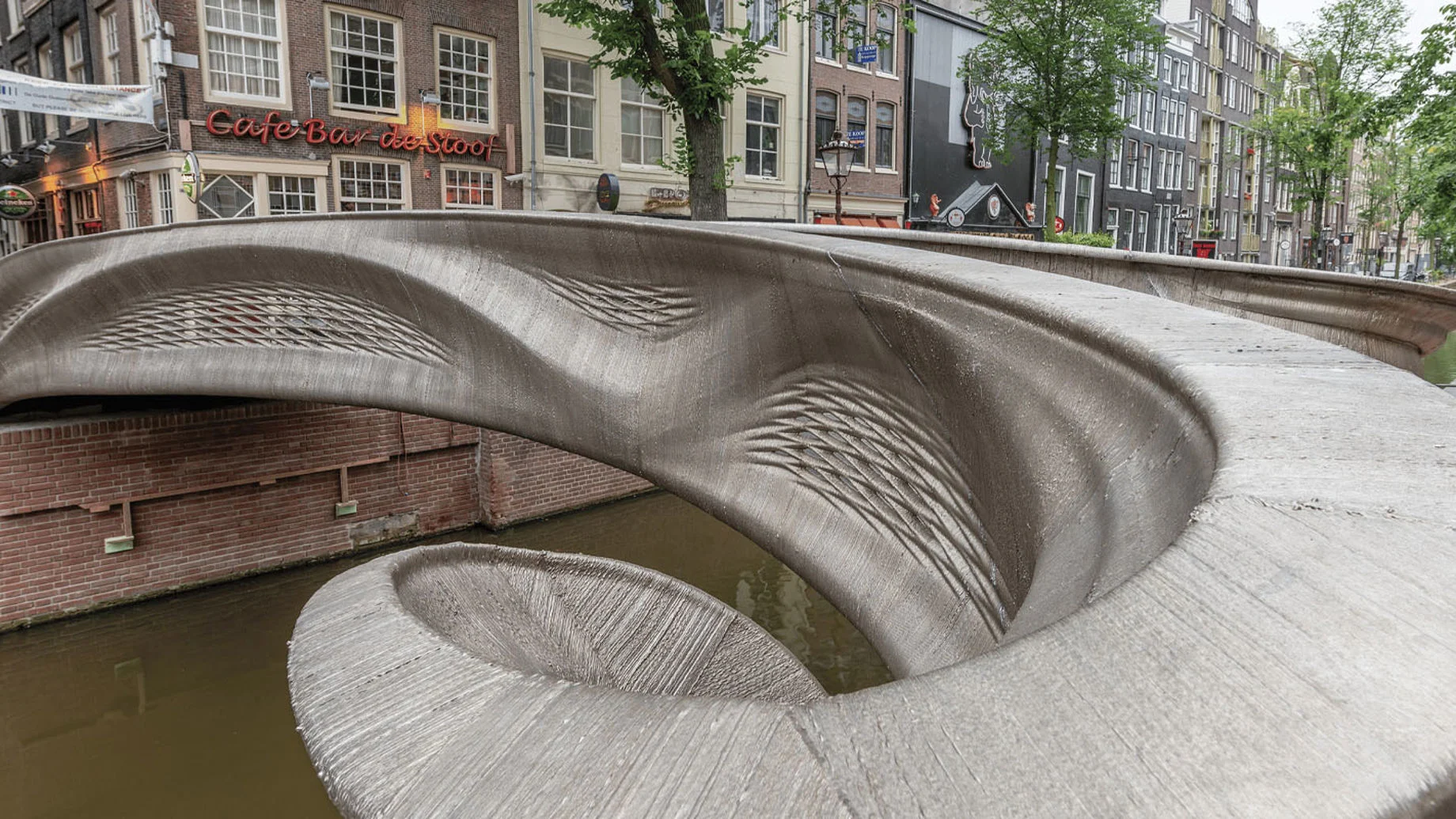
🌉 World’s First 3D Printed Steel Bridge – Amsterdam की Engineering Revolution
Keywords: 3D printed bridge, MX3D Amsterdam, civil engineering innovation, WAAM technology, smart bridge, digital twin, 3D printing in construction
🔰 Introduction
Imagine कीजिए एक ऐसा पुल जो न सिर्फ़ 3D printer से बना हो बल्कि खुद अपनी health भी monitor करता हो!
यह कोई science-fiction नहीं — यह Amsterdam का world’s first 3D printed steel bridge है।
यह प्रोजेक्ट आज civil engineering की दुनिया में एक मील का पत्थर (milestone) माना जाता है।
यह bridge दिखाता है कि कैसे digital design, robotic fabrication और material science मिलकर future construction technology को redefine कर सकते हैं।
🏗️ Project Overview – MX3D Amsterdam Bridge
- Location: Oudezijds Achterburgwal Canal, Amsterdam
- Length: लगभग 12 meters
- Material: 316L Stainless Steel
- Developed by: MX3D (Netherlands) in collaboration with Joris Laarman Lab, Arup, and Imperial College London
- Inauguration: July 2021
इस bridge की सबसे बड़ी खासियत यह है कि इसे traditional casting या bolting से नहीं, बल्कि advanced Wire Arc Additive Manufacturing (WAAM) technique से बनाया गया।
⚙️ What is WAAM (Wire Arc Additive Manufacturing)?
WAAM एक robotic 3D printing technique है जिसमें metal wire को heat कर layer by layer जोड़कर structure तैयार किया जाता है।
इसे आप robotic welding + 3D printing का मिश्रण कह सकते हैं।
MX3D की robotic arms ने लगभग 6,000 kilograms stainless steel wire का उपयोग कर यह पूरा पुल print किया।
➤ Engineering Benefits:
- Complex geometries possible without molds or formwork.
- Material waste में भारी कमी।
- Design flexibility – structures purely optimized for strength and weight.
🧠 Structural & Material Challenges
1️⃣ Geometry and Analysis
Bridge का organic shape देखने में art जैसा है, लेकिन इसकी structural analysis के लिए Finite Element Method (FEM) models का सहारा लिया गया।
Complex curves होने के कारण stress flow को accurately predict करना आसान नहीं था।
2️⃣ Material Behavior
WAAM process से बने steel में layer orientation के अनुसार strength में थोड़ा variation आता है (anisotropy)।
इसलिए tensile, hardness, fatigue और microstructure testing extensive रूप से की गई।
3️⃣ Residual Stress & Distortion
WAAM printing में high heat input के कारण residual stresses develop होते हैं।
MX3D engineers ने controlled cooling और thermal simulations से इसे minimize किया।
🔍 Testing & Performance Evaluation
Installation से पहले इस bridge पर full-scale load test किया गया।
Result? — यह लगभग 19.5 tonnes तक का load सहन कर गया, जो इसकी design capacity से काफी ज़्यादा था।
इसके अलावा vibration testing ने दिखाया कि pedestrian frequencies पर bridge पूरी तरह stable है।
📊 Key Takeaway:
WAAM-printed structures, अगर सही parameter control के साथ बनाए जाएँ, तो traditional steel bridges जितने ही safe और durable हो सकते हैं।
🌐 Smart Bridge: Sensors & Digital Twin
MX3D bridge एक smart bridge भी है।
इसमें embedded sensors हैं जो strain, vibration और temperature को real-time monitor करते हैं।
इन सभी data points को एक AI-driven digital twin में feed किया जाता है — यानी virtual replica of the bridge जो उसके behavior को लगातार सीखता और predict करता है।
💡 Advantages:
- Continuous health monitoring
- Early warning for fatigue or deformation
- Predictive maintenance – lower long-term cost
- Data for future 3D-printed structures
📏 Code Compliance & Certification
क्योंकि 3D-printed metal structures नए हैं, इसलिए Eurocode या ISO standards के साथ compatibility establish करना जरूरी था।
Imperial College London और Arup की टीम ने detailed testing reports और FEA simulations के जरिए यह साबित किया कि structure design code-compliant है।
यह future civil engineers के लिए blueprint बन गया है कि 3D printing को कैसे traditional code frameworks में fit किया जा सकता है।
🧩 Lessons for Civil Engineers
- Material Characterization is Mandatory – हर WAAM batch को individually test करें।
- Digital Twin Integration – sensors और AI analytics से real-time maintenance संभव है।
- Generative Design + Additive Manufacturing = Future – lightweight yet strong structures अब design stage पर ही possible हैं।
- Sustainability Benefit – कम waste, कम transportation, और localized production।
🚀 The Future of 3D Printing in Construction
Amsterdam का MX3D bridge यह साबित करता है कि 3D printing केवल prototyping या छोटे parts तक सीमित नहीं।
अब इसे full-scale civil infrastructure में भी उपयोग किया जा सकता है।
भविष्य में हम ऐसे bridges, buildings और metro components देखेंगे जो site पर robotically printed होंगे, और जिनका performance AI systems monitor करेंगे।
❤️ Conclusion
Amsterdam का 3D printed steel bridge सिर्फ़ एक engineering marvel नहीं, बल्कि एक सोच का विस्तार है।
यह project हमें सिखाता है कि civil engineering का future digital और data-driven होने वाला है — जहाँ हर structure न सिर्फ़ खड़ा होगा, बल्कि “सोचेगा” और खुद को सुरक्षित रखेगा।
इस पुल ने एक नया युग शुरू किया है — जहाँ design imagination को production limits नहीं रोक सकतीं।
यही असली innovation है — technology और human creativity का perfect fusion।
📚 References
- MX3D Official Website
- Arup Technical Report – MX3D: World’s First 3D Printed Steel Bridge
- Imperial College London Research Papers on WAAM Structural Testing
- The Alan Turing Institute – Digital Twin Project